
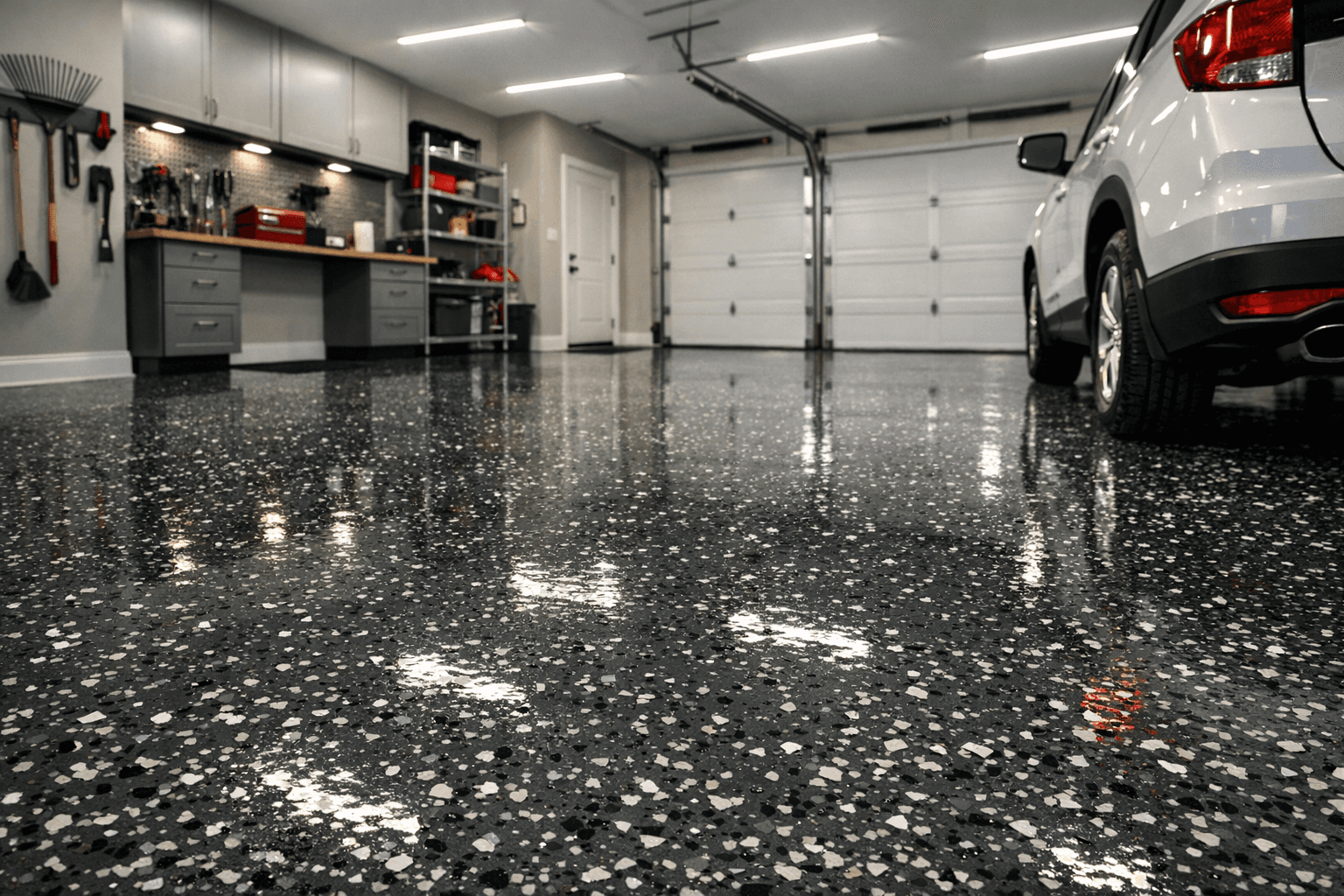
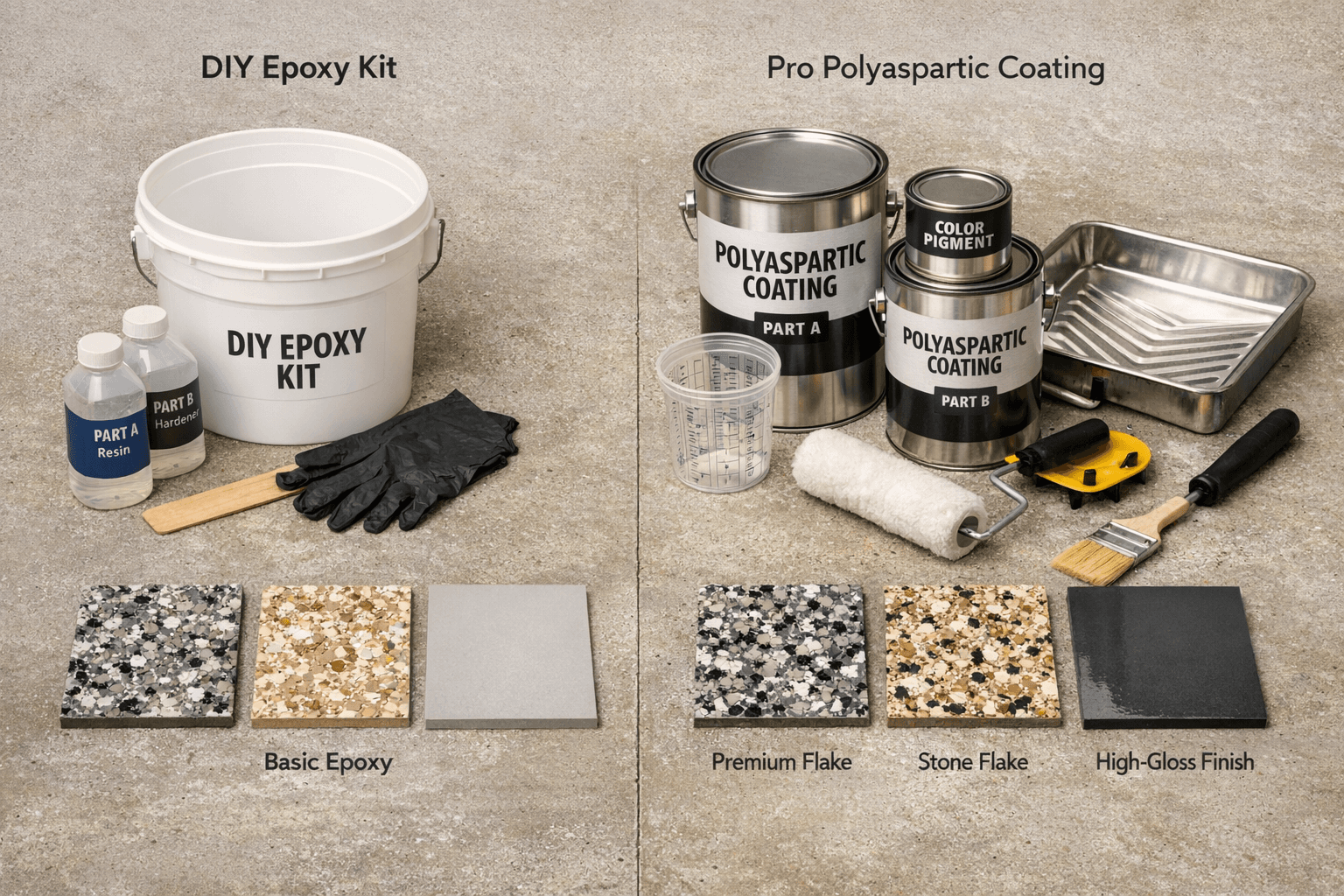
DIY Epoxy Kits vs. Professional Polyaspartic Coatings
When researching garage floor upgrades, you will run into two options: traditional epoxy and modern polyaspartic coatings. While both look good initially, they perform very differently in the harsh North Alabama climate.
The Problem with Traditional Epoxy
Standard epoxy cures hard but is brittle. As temperatures shift in a hot Huntsville summer, your concrete expands and contracts. Traditional epoxy cannot flex, leading to cracking and peeling. It can also yellow in direct sunlight.
Brittle under heat
Standard epoxy cures rigid. Huntsville's extreme summer temperatures cause concrete to expand and contract, and brittle epoxy cannot keep up — it cracks from the inside out.
UV yellowing
Traditional epoxy is not UV stable. Direct sunlight near garage doors causes the surface to yellow and chalk within one to two seasons, ruining the finish.
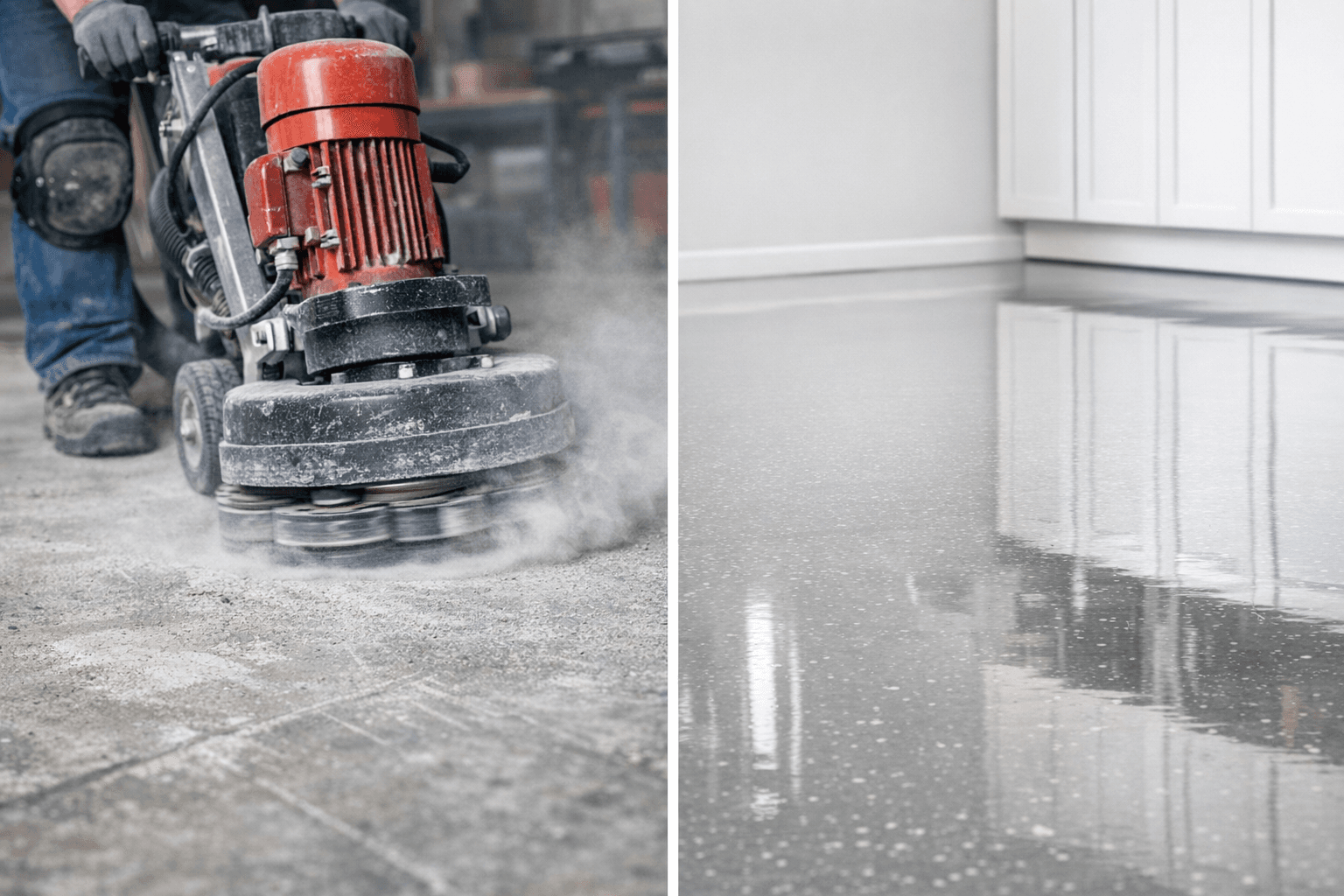
Peeling and delamination
Without proper surface prep and a flexible topcoat, standard epoxy lifts away from the concrete slab. Once peeling starts, it spreads quickly and the floor must be stripped and redone.
The Polyaspartic Advantage
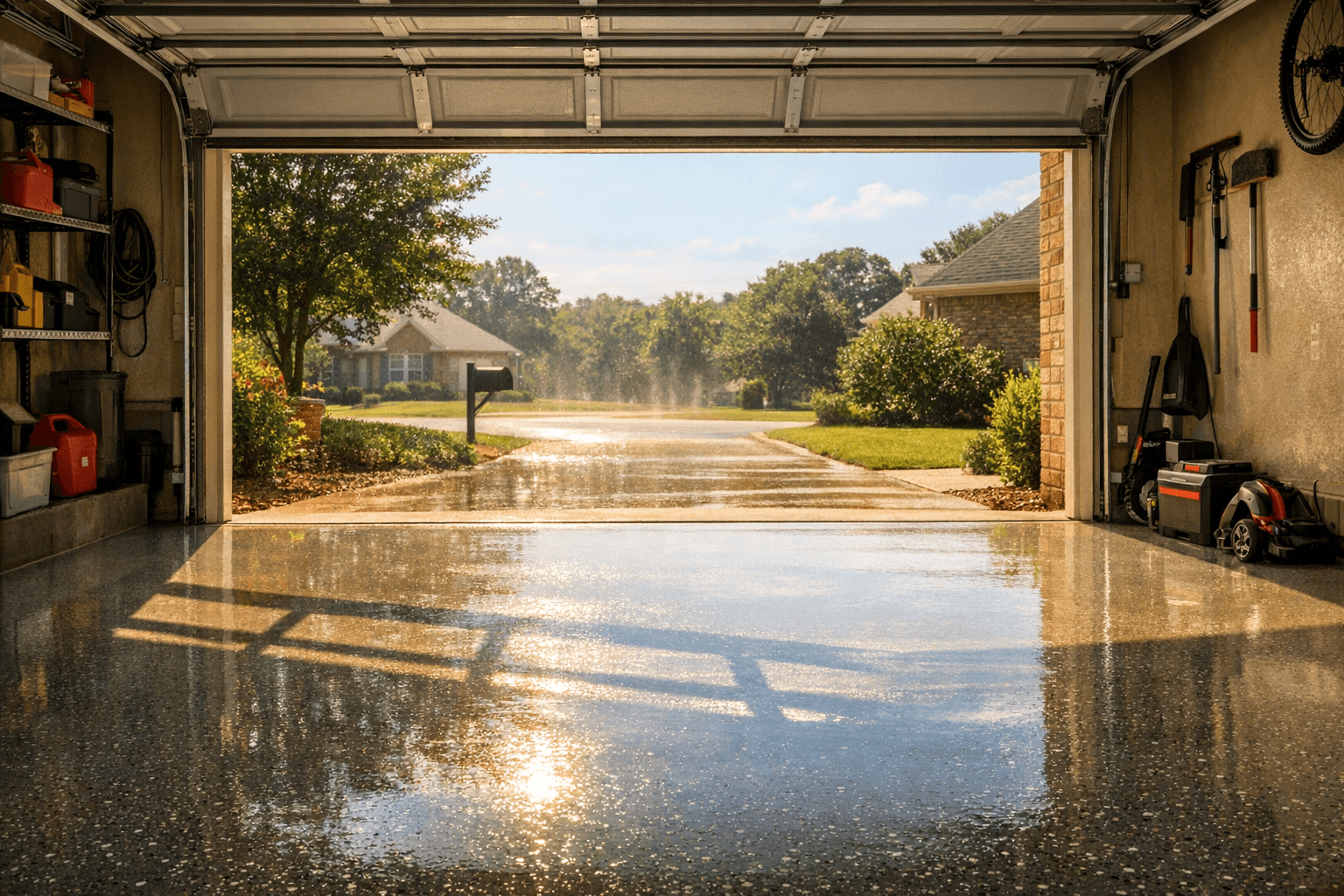
Polyaspartic technology is the gold standard for residential garages. It is 100% UV stable so it never yellows. It has high flexibility to expand with your concrete. It offers extreme chemical resistance against oil and road salts. Best of all, it allows for a 1-day installation, whereas epoxy takes up to a week to cure. At Rocket City Epoxy, we utilize commercial-grade polyaspartic systems to guarantee your floor for life.
Frequently Asked Questions
Common questions from Huntsville homeowners comparing DIY epoxy kits to professional polyaspartic coatings.
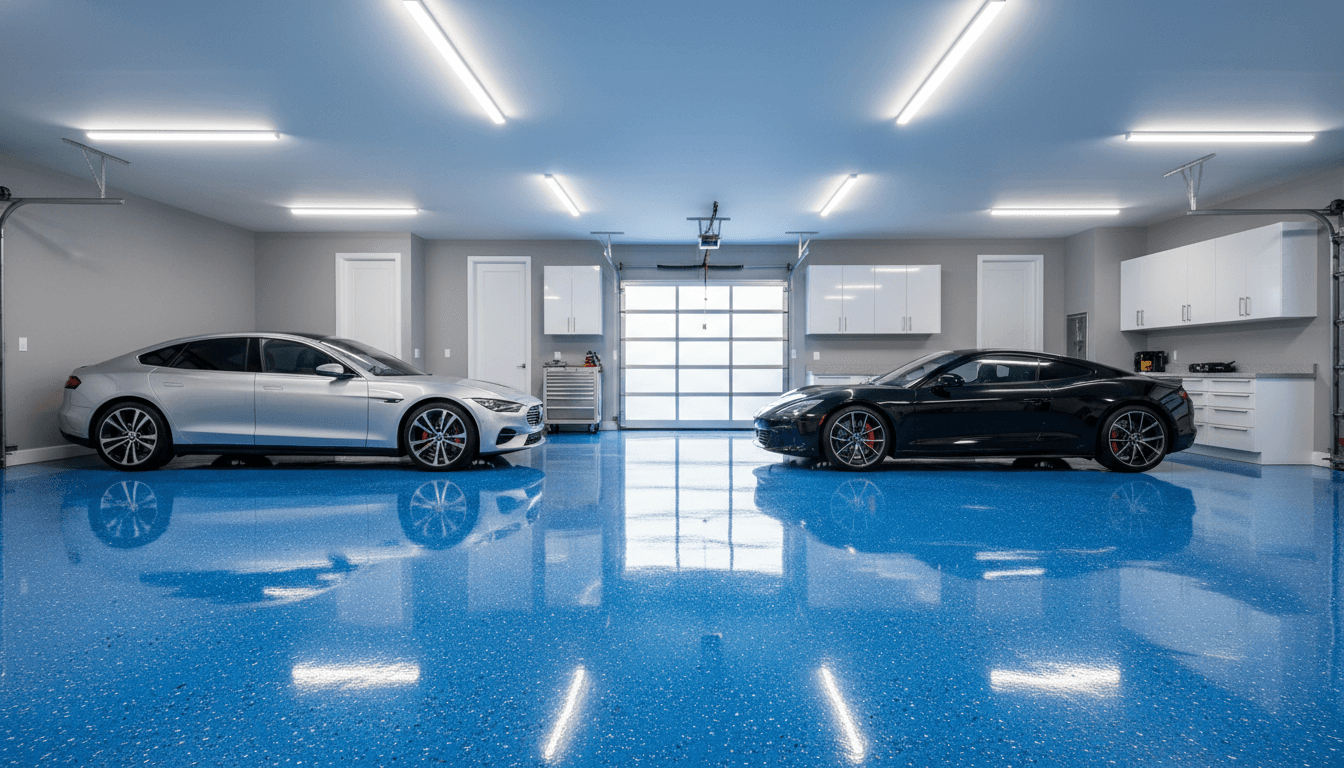
Ready for a Floor That Lasts a Lifetime?
Rocket City Epoxy installs commercial-grade polyaspartic systems across Huntsville, Madison, Athens, and Decatur — all in a single day, backed by a lifetime warranty.